Why Thai Street Food Feels Like Nowhere Else in the World: The Real 2026 Ground-Level View
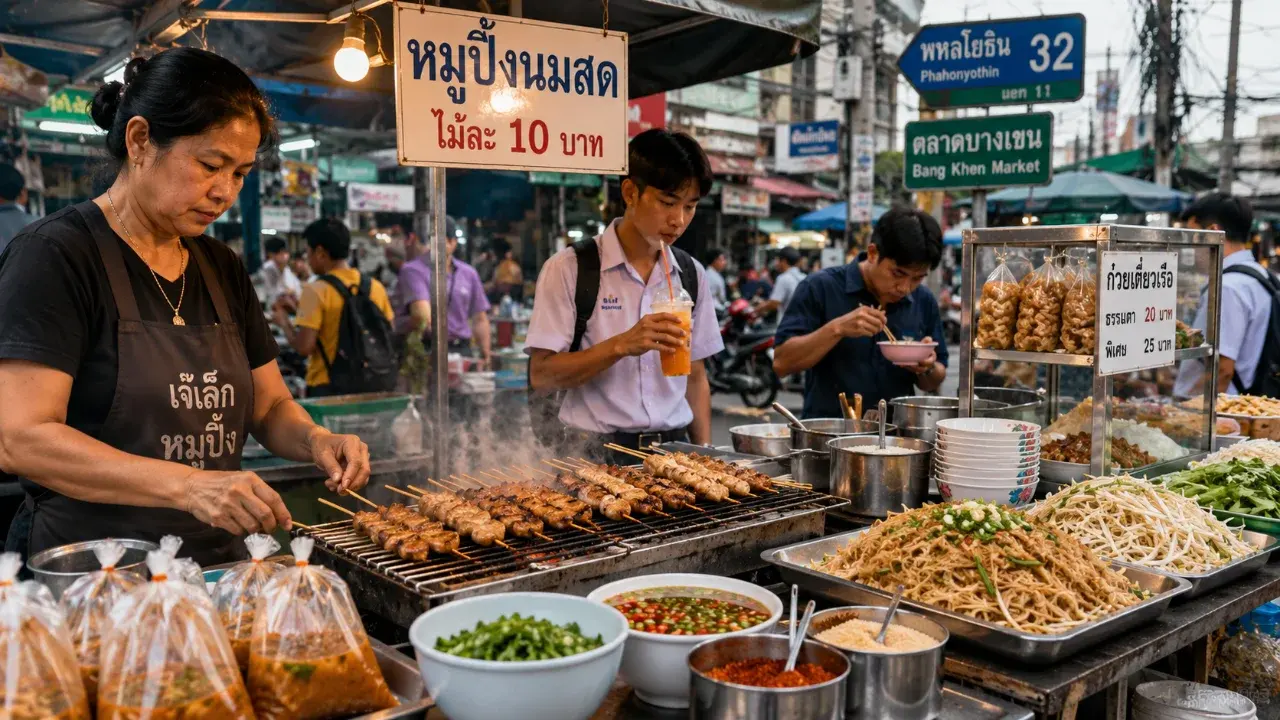
A Thai street food stall is not just a place to eat. It is an unedited, real-time operating system of how Thailand works in real life.
Before the Bangkok traffic even builds, food is already moving through the alleys of districts like Ban Khayaeng and Pathum Thani. Pork skewers smoke over open charcoal, throwing scent into the morning air. Rice porridge is packed in heat-resistant plastic bags for office workers. A student grabs an iced tea on the way to school. Someone stops at a noodle cart, points to the toppings, adds a splash of vinegar, and leaves within two minutes.
Nothing about it feels staged.
That is why Thai street food stays in a traveler’s memory long after they leave. It is not only the raw punch of the flavor. It is the feeling of stepping into a fluid, highly efficient daily rhythm that local people already inherently understand—fast, flexible, social, practical, and full of micro-choices.
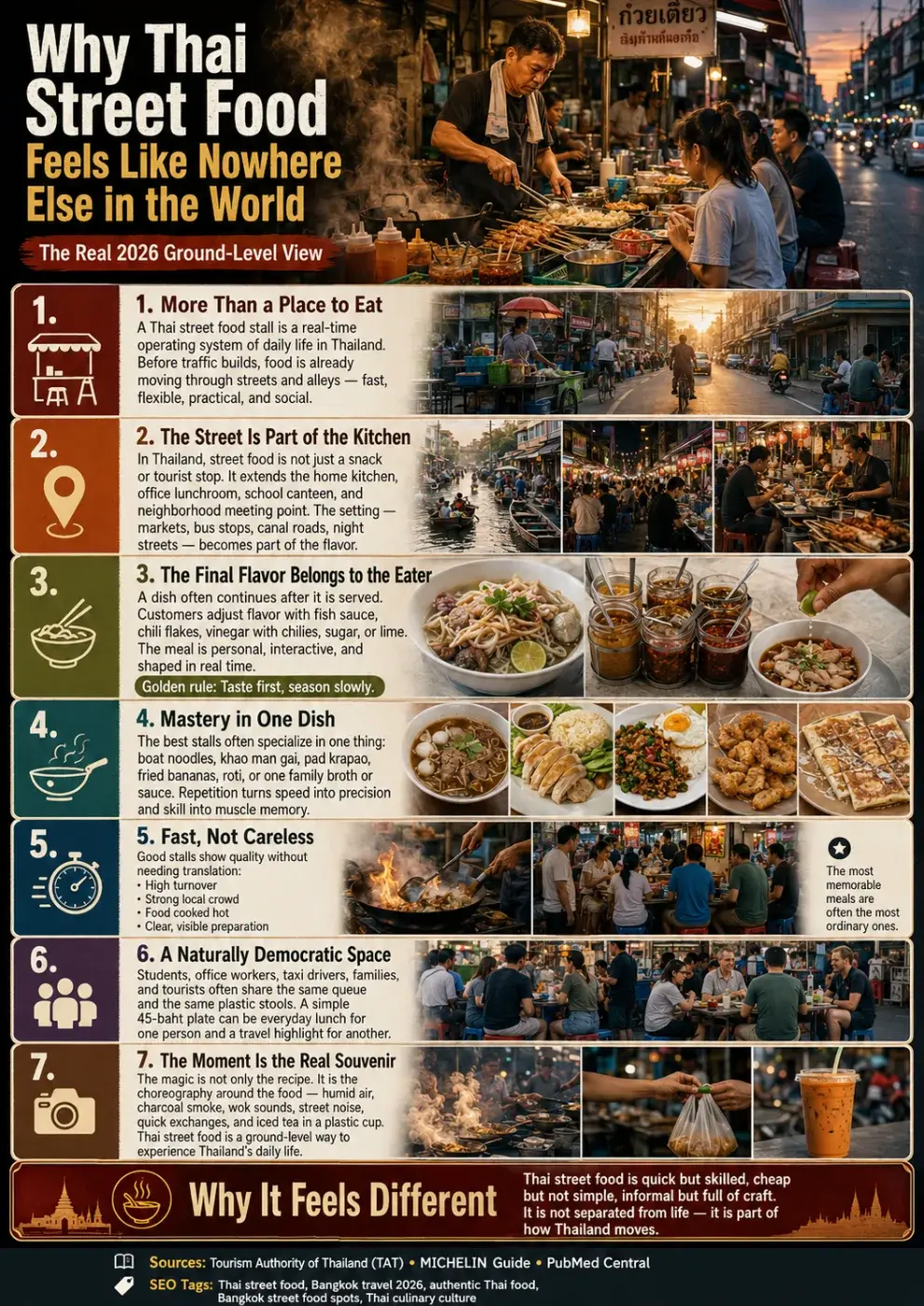
The street is an extension of the kitchen
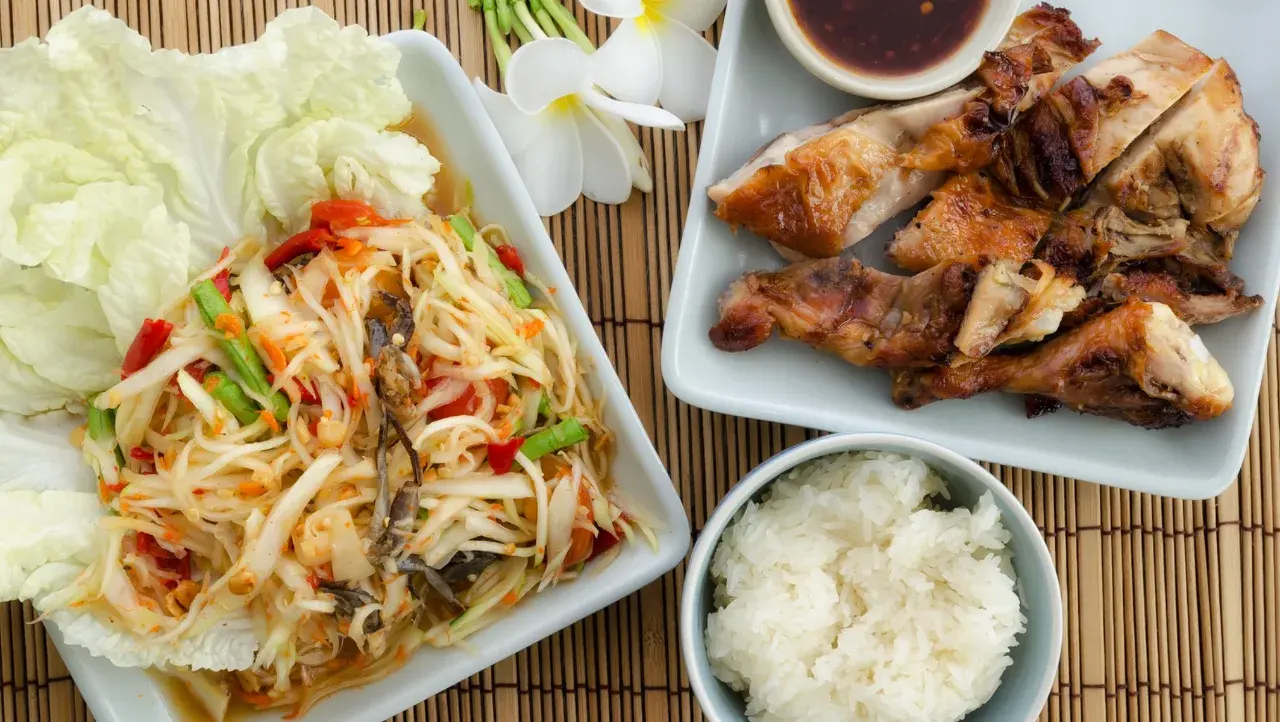
In many Western cities, street food is treated as an occasional weekend snack, a trendy food truck novelty, or a deliberate tourist stop. In Thailand, it functions as a critical extension of the home kitchen, the office lunchroom, the school canteen, and the neighborhood meeting point.
A food stall can appear beside a fresh market, near a bus stop, outside a university, along a canal road, or right next to a high-rise office building. The location is not just background scenery; it directly alters the way the food tastes.
A bowl of Kuay Tiew Ruea (boat noodles) eaten on a plastic stool beside buzzing traffic carries a completely different sensory memory from the same bowl served in an air-conditioned, quiet shopping mall restaurant. Grilled chicken bought from a vendor after a long shift feels different from grilled chicken eaten at a formal, white-cloth table.
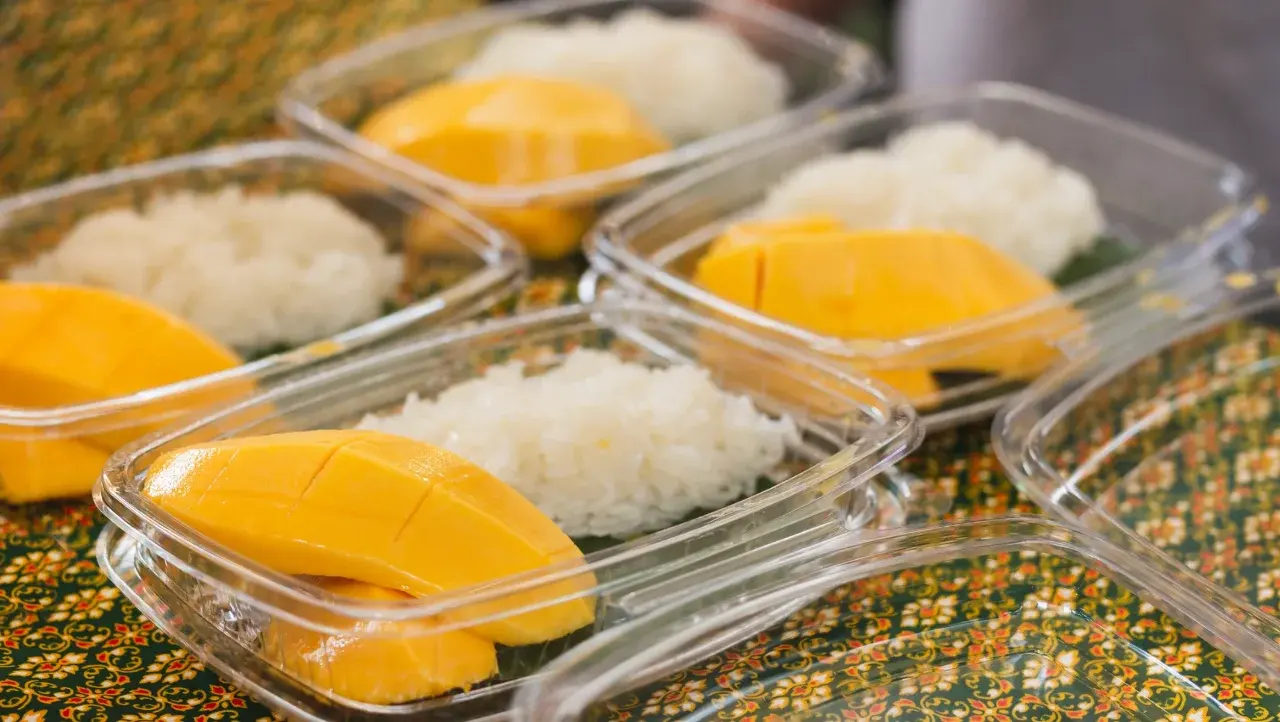
Mango sticky rice purchased from a night stall carries the ambient sound of people walking past, the low hum of motorbikes, and the rapid-fire exchange between vendor and customer. The food is tied to the concrete. That geographical reality is part of its flavor profile.
The final flavor belongs to the eater
One of the most distinct aspects of Thai food culture is that the preparation of a dish does not end when the vendor hands it to you.
A noodle bowl may arrive hot, aromatic, and balanced according to the cook's recipe, but almost every local customer will immediately adjust it. A splash of fish sauce for umami. A spoonful of dried chili flakes for heat. Pickled vinegar with sliced green chilies for acidity. A dash of sugar to round out the sharp edges.
For a first-time visitor, this open-ended cooking can feel unusual. In many culinary traditions, the chef decides the final flavor, and asking for adjustments is almost an insult. In Thailand, especially at casual roadside stalls, the eater always has the final word.
Editorial Note: This does not mean the original dish is incomplete. It means the meal is personal, interactive, and collaborative.
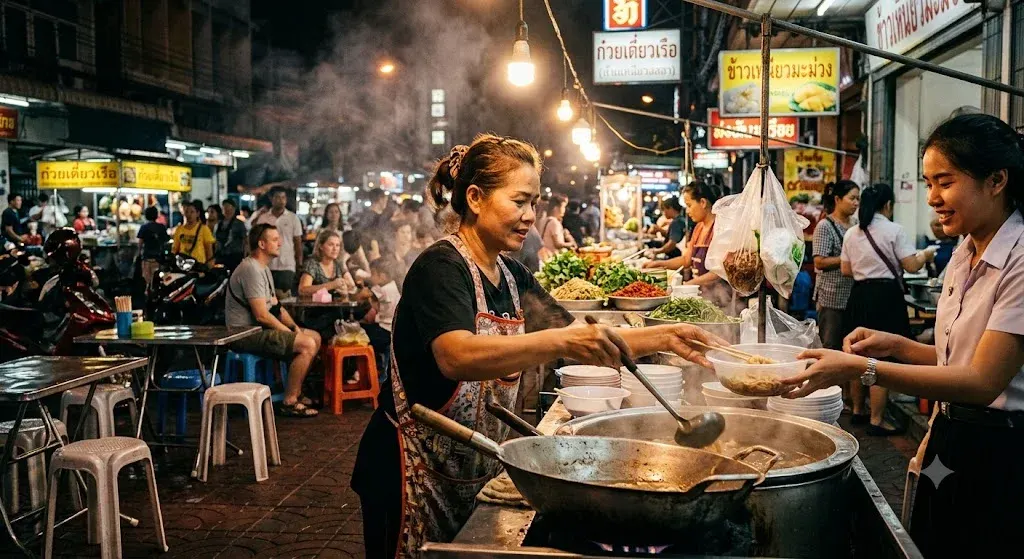
Thai cuisine is globally famous for its intense balance of spicy, sour, sweet, salty, and bitter notes. On the street, that balance becomes a living thing that people adjust in real time. Two coworkers can order the exactly same noodle soup from the same cart and leave with two entirely different flavor profiles.
The golden rule for beginners is simple: taste first, season slowly. Thai condiments are highly concentrated and can transform a dish in seconds.
Mastery in a single dish
A high-performing Thai street food stall does not need a massive, multi-page menu. In fact, the best ones rarely have one.
One vendor may be known exclusively for Khao Man Gai (chicken rice). Another may sell only beef boat noodles. Another may focus entirely on fried bananas, crispy roti, or Pad Krapao (holy basil stir-fry) cooked in a single, well-seasoned wok. Some stalls build a generational reputation from just one proprietary sauce, one master broth, or a specific family technique repeated for decades.
That extreme focus is where the craft lies.
When a vendor cooks the same single dish hundreds of times a day, speed morphs into pure muscle memory. The hand knows the exact weight of the noodles without looking. The eye reads the temperature of the oil by the ripple on its surface. The nose catches the exact millisecond before garlic crosses from aromatic to burned.
The queue moves fast because the vendor has executed the same micro-actions tens of thousands of times. This is why Thai street food manages to feel both casual and hyper-precise. It may be served on a cheap plastic plate, but the technical execution behind it is elite.
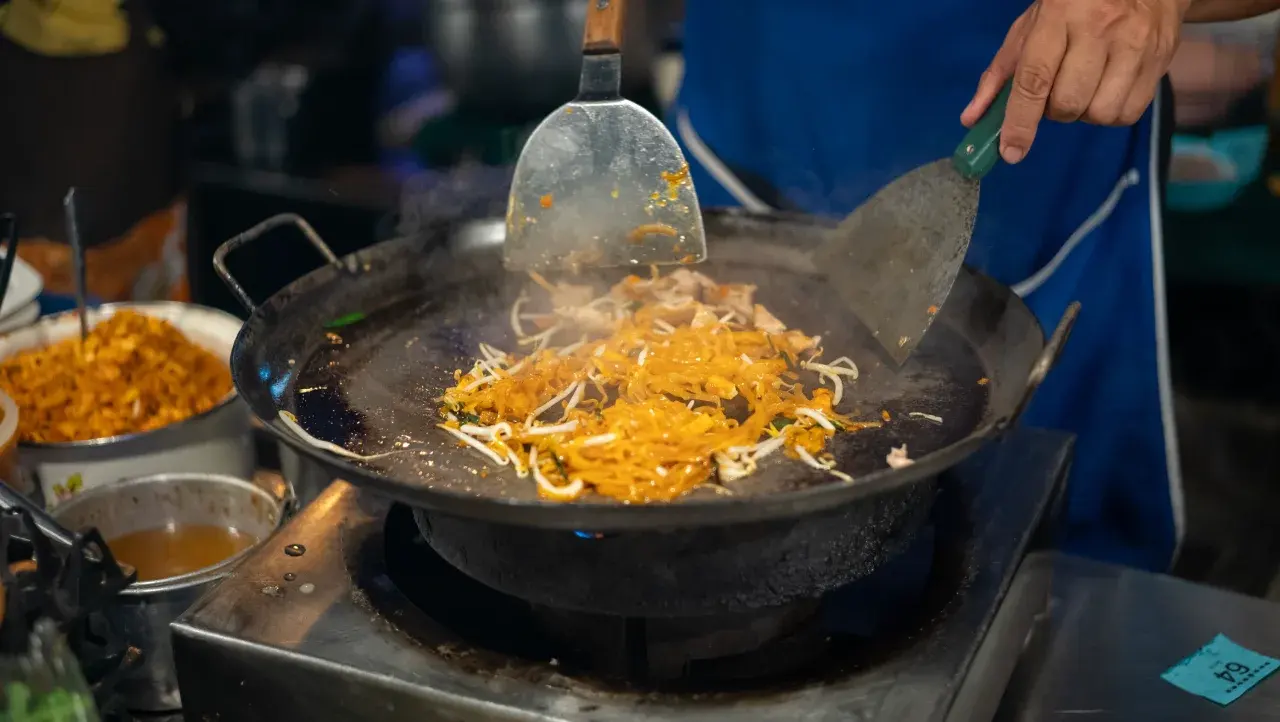
Fast food, but not careless food
Thai street food is undeniably quick, but good stalls have clear, visible indicators of trust and quality that require no translation.
-
High Turnover: Look for steady crowds and high turnover. Look for ingredients that move rapidly out of the prep containers rather than sitting untouched under the sun.
-
Local Density: A crowd of local office workers or motorbike drivers during peak breakfast or lunch hours tells you more about food safety and flavor than any international travel app listicle.
-
Thermal Safety: Look for food cooked hot right in front of you.
The most memorable street food experiences are rarely the most dramatic or heavily curated ones. They are ordinary: a quick bowl of hot soup before catching a train, a bag of hot pork skewers with sticky rice before work, or a late-night plate of stir-fried basil after a grueling day. That ordinariness is exactly why it works. It is not food performance art; it is fuel for the collective day.
A naturally democratic space
Thai street food spaces are deeply egalitarian because they pull entirely different cross-sections of society into the exact same eating rhythm.
At peak lunch hour, university students, corporate executives, taxi drivers, street sweepers, and foreign tourists will all stand in the same queue or sit elbow-to-elbow on matching neon plastic stools. Some take food home in tied plastic bags, while others order by habit using quick hand gestures.
This mix strips away social pretense. A simple 45-baht plate of rice and curry can simultaneously serve as a quick lunch for a laborer, a comforting standard for a local family, and an exotic travel highlight for a tourist.
The very same street pavement can host an everyday cart, a third-generation shopfront, and a vendor highlighted in international culinary guides. That structural range is exceptionally rare in global food culture, allowing the cuisine to feel deeply local and globally accessible at the same time.
The moment is the real souvenir
Many travelers try to replicate Thai street food at home, only to find the magic missing. That is because the flavor is irrevocably attached to the environment.
A high-end restaurant abroad can copy a recipe exactly. A modern food court can mimic the physical dish. But you cannot export the choreography around the food: the humid air, the heavy scent of charcoal smoke, the rhythmic clatter of metal woks hitting iron burners, the ambient chatter of the neighborhood, and the cold sweetness of a Thai iced tea sweating in a plastic cup.
Street food in Thailand is more than a bucket list checklist of unique items to taste. It is an unvarnished, entry-level access point to the country's daily survival, social fabric, and shared joy.

เขียนโดย Postjung Insights
 รู้หรือไม่? เปิดรายได้พนักงานส่งพัสดุของแต่ละแอป วันหนึ่งได้เท่าไร
 5 ไอเทมป้องกันความร้อนให้บ้านแบบโบราณ! ภูมิปัญญาเก่าที่ช่วยบ้านเย็นลงได้ 3-5 องศา
 อำเภอที่มีชื่ออำเภอสั้นที่สุด 3 อำเภอเท่านั้นในประเทศไทย
 รู้หรือไม่? ความทรงจำวัยเด็กอาจไม่ได้เหมือนที่เราเคยจำ! สมองสามารถ “เติมเรื่อง” ให้เราได้
 7 บทเพลงไวรัลยุคโบราณ! เพลงงานวัดที่เปิดเมื่อไหร่ คนก็ลุกขึ้นรำวงเมื่อนั้น
 7 คันเบ็ดตกปลาโบราณ สายเรโทรยอมทุ่มเงินซื้อ! ยิ่งเก่า ยิ่งหายาก ยิ่งมีเรื่องราว
 เปิด 5 โรงเรียนหญิงล้วนเก่าแก่ของไทย ที่มีประวัติยาวนานกว่าศตวรรษ
 แปลปกสลาก งวด 1 ต.ค. 69 ส่องตัวเลขจากภาพปกสลากกินแบ่งรัฐบาล
 โรงเรียนชายล้วนแห่งแรกของไทยคือที่ไหน? ย้อนดูจุดเริ่มต้นโรงเรียนสวนกุหลาบวิทยาลัย
 ส่องเลข 3 สำนักพิมพ์ งวด 1 ต.ค. 69 ตัวไหนมีข้อมูลตรงกัน
 โรงเรียนที่มีนักเรียนมากที่สุดในไทย
 ตาราง “เด่นเหนือเด่นใต้” งวด 1 ต.ค. 69 เปิดข้อมูลตามโพย เลขไหนอยู่ตรงไหนอำเภอที่มีชื่ออำเภอสั้นที่สุด 3 อำเภอเท่านั้นในประเทศไทย
 English Edition