Thailand Beyond the Postcard: Why Everyday Life Is What Travelers Remember Most
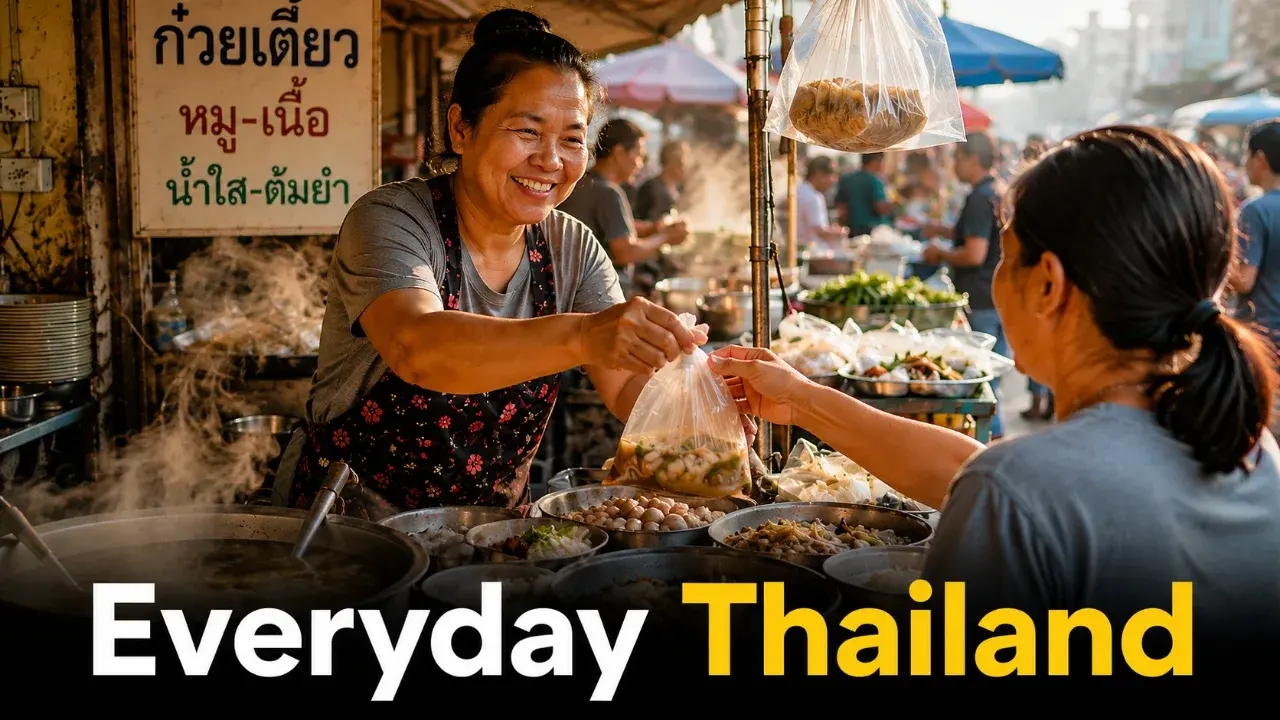
Most people arrive in Thailand with a picture already in their mind.
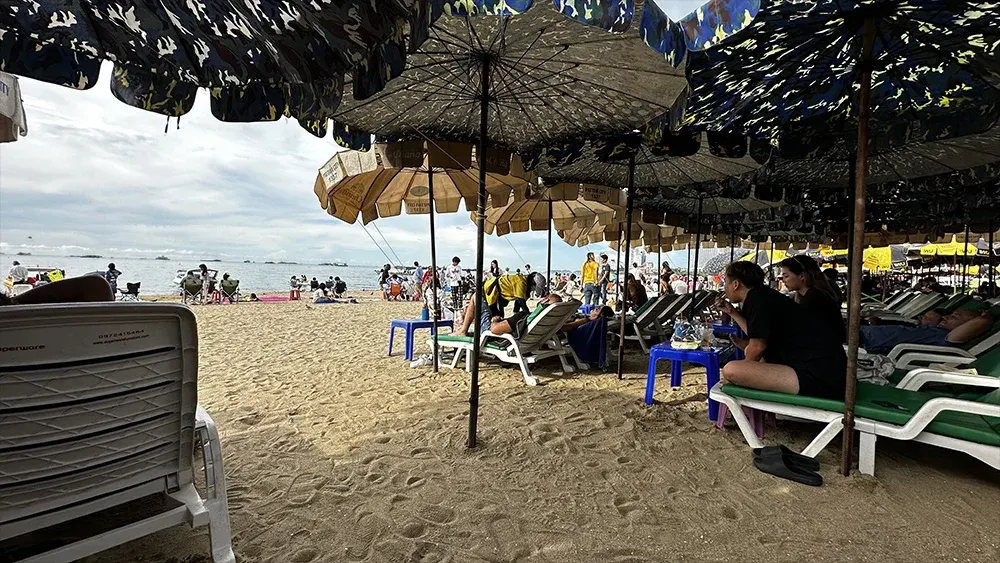
A beach with clear water.
A golden temple.
A tuk-tuk in Bangkok traffic.
A night market full of lights.
A plate of pad Thai.
A bowl of tom yum goong.
Those images are not wrong. They are part of Thailand’s charm, and they still matter.
But ask many travelers what they remember most after leaving Thailand, and the answer is often something smaller.
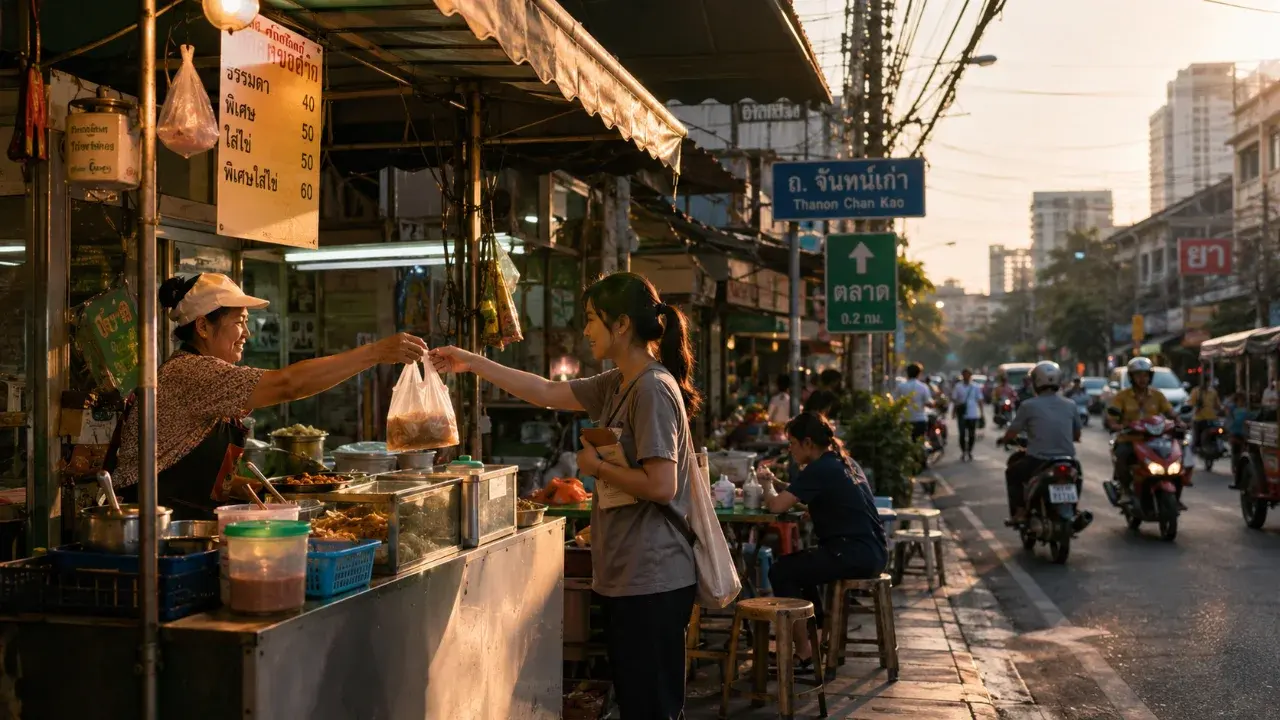
A vendor smiling while handing over a bag of noodles.
The smell of grilled pork on a morning street.
The sound of a temple bell behind traffic.
A late-night 7-Eleven snack run that became unexpectedly fun.
A stranger helping with directions using only a few English words and a lot of kindness.
These moments do not always appear on travel posters.
But they are often the moments that stay.
Thailand is beautiful because of its famous places. But it is unforgettable because of its everyday life.
The Thailand People Remember Is Often Ordinary
A perfect beach photo can be beautiful, but it does not always explain how a country feels.
Everyday Thailand does.
Walk through a morning market and the country starts to make sense in a different way. You see people buying breakfast before work. You hear vendors calling out prices. You smell soup, fried garlic, grilled meat, herbs and fresh fruit. You see plastic bags tied with rubber bands, curry poured into small containers, and customers who already know exactly which stall they want.
Nothing has to be dramatic.
That is the point.
The scene feels real because it is real.
Thailand is not only a place where visitors go to look at things. It is a place where daily life happens in public: on sidewalks, in markets, at food stalls, inside temples, around convenience stores and along busy streets.
For many visitors, this openness is part of the magic.
You do not need a private tour to see culture.
You can find it in breakfast.
You can hear it in traffic.
You can smell it from a pot of soup.
You can notice it in the way people make space for one another in a crowded market.
This is why ordinary Thailand can feel more powerful than a polished travel image.
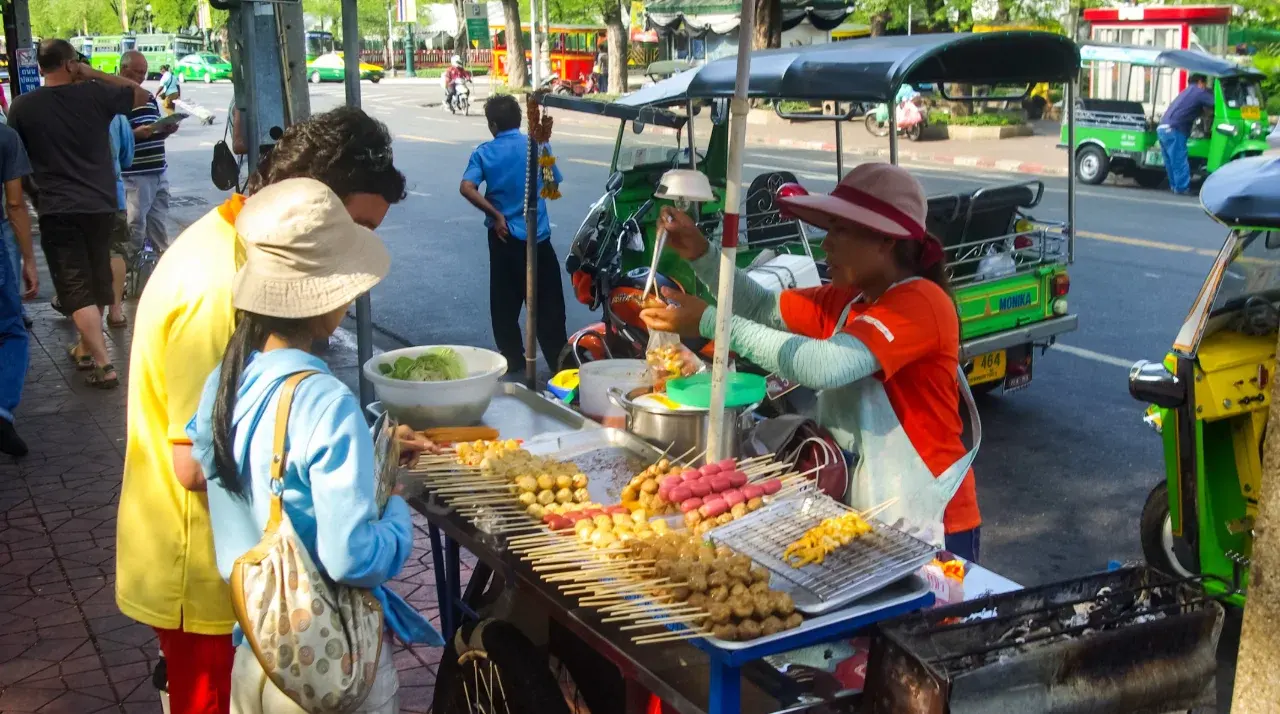
Thai Food Is a Whole Way of Life
Thai food is one of the easiest ways for the world to connect with Thailand.
Tom yum goong, pad Thai, green curry, som tam, massaman curry and mango sticky rice are known far beyond the country. But Thai food is not memorable only because it tastes good.
It is memorable because it feels alive.
A Thai meal often plays with contrast: spicy, sour, salty, sweet, fresh, crispy, soft and aromatic. People adjust flavors at the table. They add chili, lime, fish sauce or sugar. Dishes are shared. A meal can be quick, casual and deeply satisfying at the same time.
Food in Thailand is rarely just food.
It can be care.
It can be habit.
It can be family.
It can be welcome.
It can be memory.
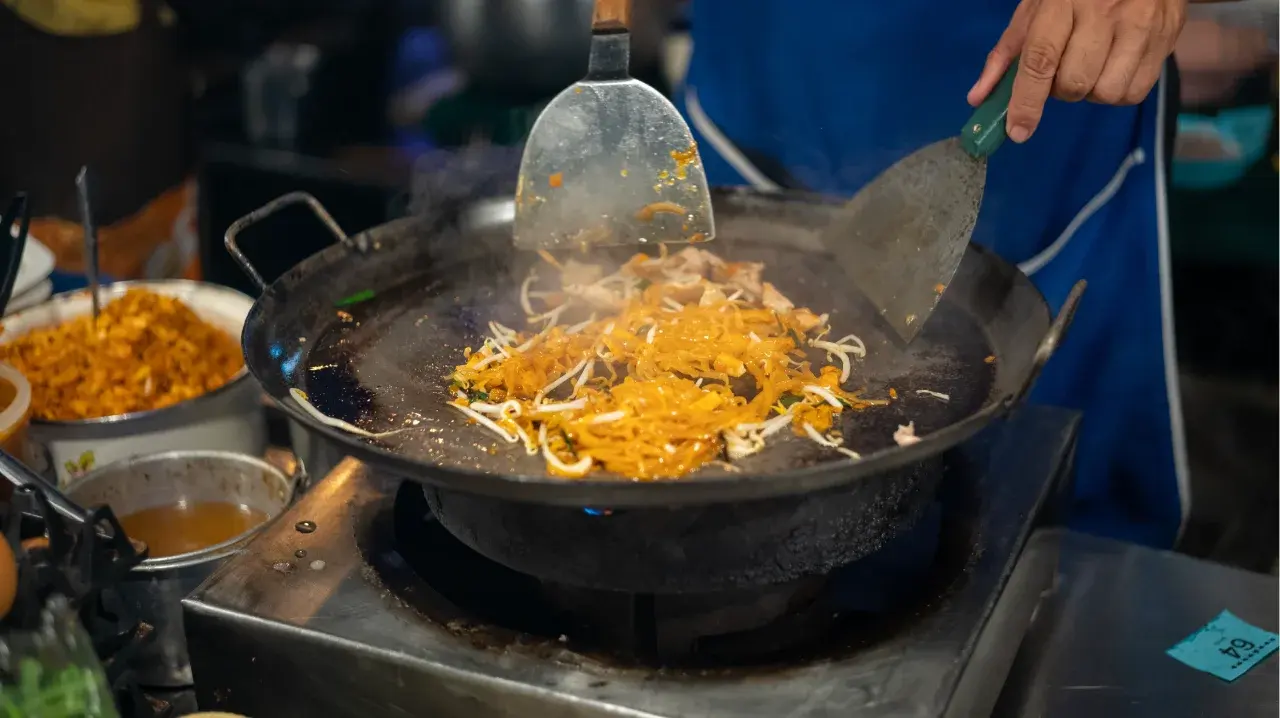
This is why a simple street stall can feel special.
A noodle vendor may spend years perfecting one broth. A dessert seller may fold banana leaves with the same hand movement used since childhood. A curry stall may carry the flavor of a region in one small plastic bag.
The stall may look ordinary from the outside.
But inside that ordinary scene is skill, repetition and culture.
UNESCO’s recognition of Tomyum Kung as intangible cultural heritage gives international attention to something many visitors already understand after eating in Thailand: food here is not only a menu. It is part of daily life.
Why a 7-Eleven Run Can Become a Travel Memory
It may sound strange, but for many visitors, a Thai 7-Eleven becomes part of the trip.
In some countries, convenience stores are forgettable. In Thailand, they can feel like a small adventure.
A traveler walks in for water and comes out with toasted sandwiches, local-flavor chips, bottled tea, instant noodles, herbal drinks, ready meals, desserts and snacks they have never seen before.
It is simple. It is cheap. It is easy. And it feels surprisingly local.
That is why these small stops become travel memories.
Not every meaningful experience has to be ancient, sacred or expensive. Sometimes it is just the fun of discovering what local people buy when they are hungry at midnight.
A convenience store can show modern Thailand in a way a landmark cannot.
It shows what people eat quickly.
What flavors are popular.
What products are part of daily routine.
What small comforts people reach for after work, after school or after a night out.
For visitors, this can be charming because it feels unscripted.
No one has to explain it too much.
You just walk in, look around and learn something small about the country.
Markets Show Thailand at Its Most Human
If someone wants to understand Thailand beyond tourist attractions, a local market is one of the best places to start.
Markets show how people live.
They show breakfast habits, family routines, local ingredients, neighborhood relationships and the speed of daily work. They show how much of Thai life is built around food, movement and small exchanges.
A market is not only a place to buy things.
It is a place where the day begins.
There may be office workers choosing takeaway meals, parents buying breakfast for children, elderly customers picking fruit, monks walking nearby, delivery riders waiting for orders and vendors who know their regulars without needing to ask.
This is the kind of Thailand that cannot be reduced to a postcard.
It is busy, practical, warm, noisy and human.
It may not be perfectly clean or perfectly quiet. It may not look arranged for tourists. But that is exactly why it feels memorable.
It gives visitors something more valuable than a staged scene.
It gives them a glimpse of rhythm.
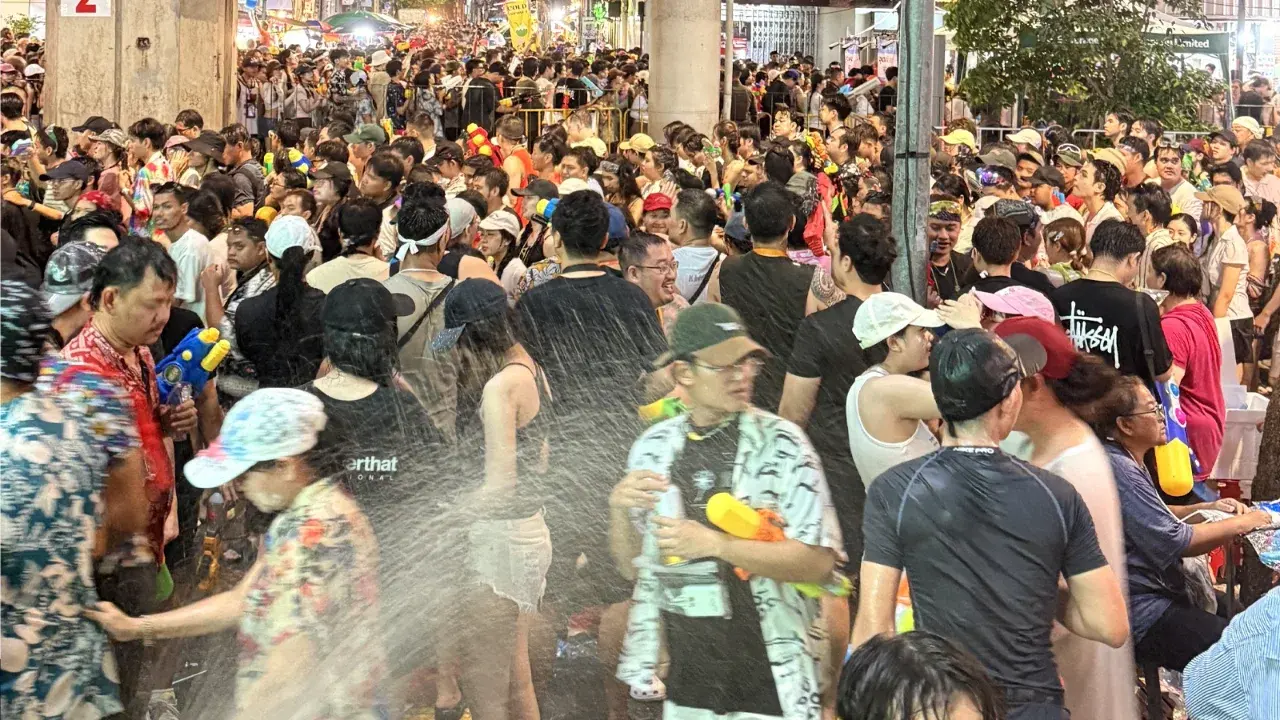
Songkran Is More Than a Water Fight
Thai festivals are often remembered through beautiful images.
Songkran is seen through water splashing in the streets.
Loy Krathong is seen through floating lights.
Temple fairs are seen through candles, music, food stalls and crowds at night.
Those images are powerful, but they are only part of the story.
Songkran, for example, is known around the world as Thailand’s famous water festival. But its deeper meaning is connected to Thai New Year, family reunions, respect for elders and ancestors, Buddhist practices, cleansing and wishes for good fortune.
That meaning changes the way the festival feels.
The water is not only fun.
It also suggests renewal.
The holiday is not only a party.
It is also a time for family, respect and blessing.
This is why Thai festivals continue to interest people around the world. They are colorful enough to attract attention, but meaningful enough to be remembered after the photos are gone.
The same is true of Loy Krathong. Many visitors first notice the beauty of floating lights. But the feeling behind the festival is often about gratitude, reflection and letting go.
Thailand’s festivals work because they are visual and emotional at the same time.
Temples Are Not Just Places to Take Photos
Thai temples are some of the most photographed places in the country.
Their golden stupas, Buddha images, murals, rooflines and courtyards are visually powerful. For many visitors, temples are among the first things they associate with Thailand.
But temples are not only attractions.
For many communities, temples are part of life.
They can be places for prayer, funerals, merit-making, meditation, education, charity, festivals and local gatherings. They can be quiet places for one person and social places for an entire neighborhood.
A visitor may see architecture.
A local family may see memory.
An elderly person may see comfort.
A child may remember food stalls and games during a temple fair.
A community may see a place that has supported people for generations.
This is why temples in Thailand should not be treated only as photo backgrounds.
They are living spaces.
You can see this in small details: flower garlands, monks on alms rounds, spirit houses, offerings outside shops, incense smoke, families arriving together, or people stopping briefly to pray before continuing with their day.
The beauty is not only in gold.
It is in how these places are still used.
Bangkok Is Memorable Because It Refuses to Be Simple
Bangkok can confuse first-time visitors.
It is fast and slow.
Modern and traditional.
Beautiful and messy.
Convenient and exhausting.
Spiritual and commercial.
That mix is exactly why the city stays in memory.
Luxury malls stand near street food stalls. Old temples sit beside high-rise buildings. Motorbike taxis move below skytrains. Office workers, monks, students, vendors, tourists and delivery riders share the same urban rhythm.
Bangkok does not offer one simple version of Thailand.
It shows many versions at once.
This is why the city can be more interesting than a neat travel description. It does not hide its contrasts. It lets them sit side by side.
A person can visit a luxury shopping mall, eat noodles on the street, pass a temple, buy fruit from a market, take the BTS and end the night with a convenience-store snack.
All of that can happen in one day.
That is Bangkok.
And for many visitors, that is why it feels so alive.

Thai Hospitality Often Lives in Small Gestures
Thailand is often called the “Land of Smiles.” The phrase can sound like a tourism slogan, but many visitors remember the country through small acts of kindness.
A food seller helps someone order without making them feel embarrassed.
A hotel worker remembers a guest’s routine.
A stranger explains a bus route with hand gestures.
A shop owner warns someone about rain.
A local person softens a difficult conversation so everyone can save face.
These are not dramatic moments.
But they matter.
Travel is not only about what people see. It is also about how a place makes them feel.
Of course, Thailand is not perfect. It has traffic, inequality, economic pressure, crowded cities and social problems like any real country.
But warmth in everyday interaction remains part of Thailand’s appeal because it can appear in ordinary situations, not only in formal service.
For visitors, this makes the country feel easier to approach.
The kindness is often quiet.
The gesture may be small.
But the memory can last.
Thailand’s Soft Power Comes From Many Small Things Together
People often talk about Thailand’s soft power through food, festivals, tourism, film, fashion, wellness, martial arts and culture.
All of these matter.
But Thailand’s strongest soft power may not come from one single thing.
It may come from how many small things work together.
Food creates familiarity.
Markets create sensory memory.
Temples create spiritual depth.
Festivals create emotion.
Hospitality creates human connection.
Bangkok creates contrast.
Convenience stores create small surprises.
Everyday life creates stories.
This is why Thailand is easy to like but difficult to fully explain.
The country is not interesting because it is perfect.
It is interesting because it is layered.
A visitor can return many times and still find another Thailand: a regional dish, a neighborhood market, a temple fair, a creative district, a beach town, a craft community, a local café, a rural road or a festival they had never heard of before.
Thailand keeps changing.
And because so much of daily life is visible, visitors can feel that change directly.
The Better Way to Understand Thailand
The old way to describe Thailand was simple: beaches, temples, smiles and food.
Those things still matter.
But they are not enough.
A better way to understand Thailand is to look at how daily life connects everything.
The food stall is connected to family skill.
The market is connected to neighborhood rhythm.
The temple is connected to community.
The festival is connected to memory.
The convenience store is connected to modern habit.
The city street is connected to pressure, creativity and survival.
The smile is connected to social behavior, not only tourism branding.
This view makes Thailand more interesting and more respectful.
It avoids turning the country into a perfect paradise. It also avoids reducing Thailand to stereotypes or viral travel clips.
Thailand is beautiful, but not simple.
Welcoming, but not without tension.
Traditional, but constantly changing.
Spiritual, but also commercial.
Local, but deeply connected to the world.
That complexity is what makes the country worth understanding.
Final Takeaway
Thailand’s global appeal does not come from one beach, one temple, one dish or one festival.
It comes from the way culture appears in everyday life.
People may first visit Thailand for famous attractions. But many remember the country because of ordinary moments: breakfast from a street stall, market sounds in the morning, kindness in small interactions, temple bells behind traffic, a festival with family meaning, or a convenience-store snack that somehow becomes part of the trip.
That is why Thailand stays with people long after they leave.
It is not only a destination.
It is a living culture people can taste, hear, observe and feel.
UNESCO Intangible Cultural Heritage
Tourism Authority of Thailand
Thailand PRD / Royal Thai Government
Creative Economy Agency
Accor / Globetrender Travel Trends 2026
Condé Nast Traveler Travel Trends 2026
EU Tourism Platform
References:
https://ich.unesco.org/en/RL/songkran-in-thailand-traditional-thai-new-year-festival-01719
https://ich.unesco.org/en/RL/tomyum-kung-01879
https://www.tourismthailand.org/
https://thailand.prd.go.th/en/content/category/detail/id/48/iid/464661
https://www.cea.or.th/en/single-softpower/cea-soft-power
https://press.accor.com/all-accor-travel-trends-eng/?lang=eng
https://www.cntraveler.com/story/the-biggest-travel-trends-of-2026
https://transition-pathways.europa.eu/tourism/news/europes-travel-outlook-2026-five-major-trends-will-shape-way-we-explore

เขียนโดย Postjung Insights
 5 ไอเทมป้องกันความร้อนให้บ้านแบบโบราณ! ภูมิปัญญาเก่าที่ช่วยบ้านเย็นลงได้ 3-5 องศา
 อำเภอที่มีชื่ออำเภอสั้นที่สุด 3 อำเภอเท่านั้นในประเทศไทย
 รู้หรือไม่? เปิดรายได้พนักงานส่งพัสดุของแต่ละแอป วันหนึ่งได้เท่าไร
 7 บทเพลงไวรัลยุคโบราณ! เพลงงานวัดที่เปิดเมื่อไหร่ คนก็ลุกขึ้นรำวงเมื่อนั้น
 รู้หรือไม่? ความทรงจำวัยเด็กอาจไม่ได้เหมือนที่เราเคยจำ! สมองสามารถ “เติมเรื่อง” ให้เราได้
 เช็กด่วน ! ข่าวบัตรสวัสดิการแจก 10,000 บาท ก.ย. 69 จริงหรือ ? ก่อนเชื่อควรรู้อะไร
 โรงเรียนที่มีนักเรียนมากที่สุดในไทย
 โรงเรียนชายล้วนแห่งแรกของไทยคือที่ไหน? ย้อนดูจุดเริ่มต้นโรงเรียนสวนกุหลาบวิทยาลัย
 7 คันเบ็ดตกปลาโบราณ สายเรโทรยอมทุ่มเงินซื้อ! ยิ่งเก่า ยิ่งหายาก ยิ่งมีเรื่องราว
 ตาราง “เด่นเหนือเด่นใต้” งวด 1 ต.ค. 69 เปิดข้อมูลตามโพย เลขไหนอยู่ตรงไหน
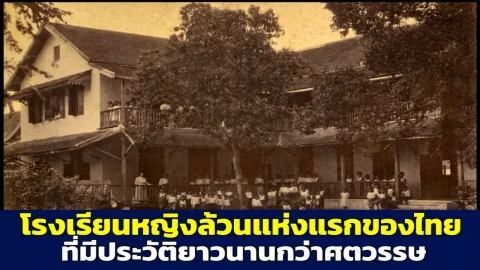 เปิด 5 โรงเรียนหญิงล้วนเก่าแก่ของไทย ที่มีประวัติยาวนานกว่าศตวรรษ
 AI วิเคราะห์สถิติ 20 ปีหวยงวด 1 ตุลาคม 69 ให้เลขท้าย 2 ตัวเน้นๆ!อำเภอที่มีชื่ออำเภอสั้นที่สุด 3 อำเภอเท่านั้นในประเทศไทย
 English Edition